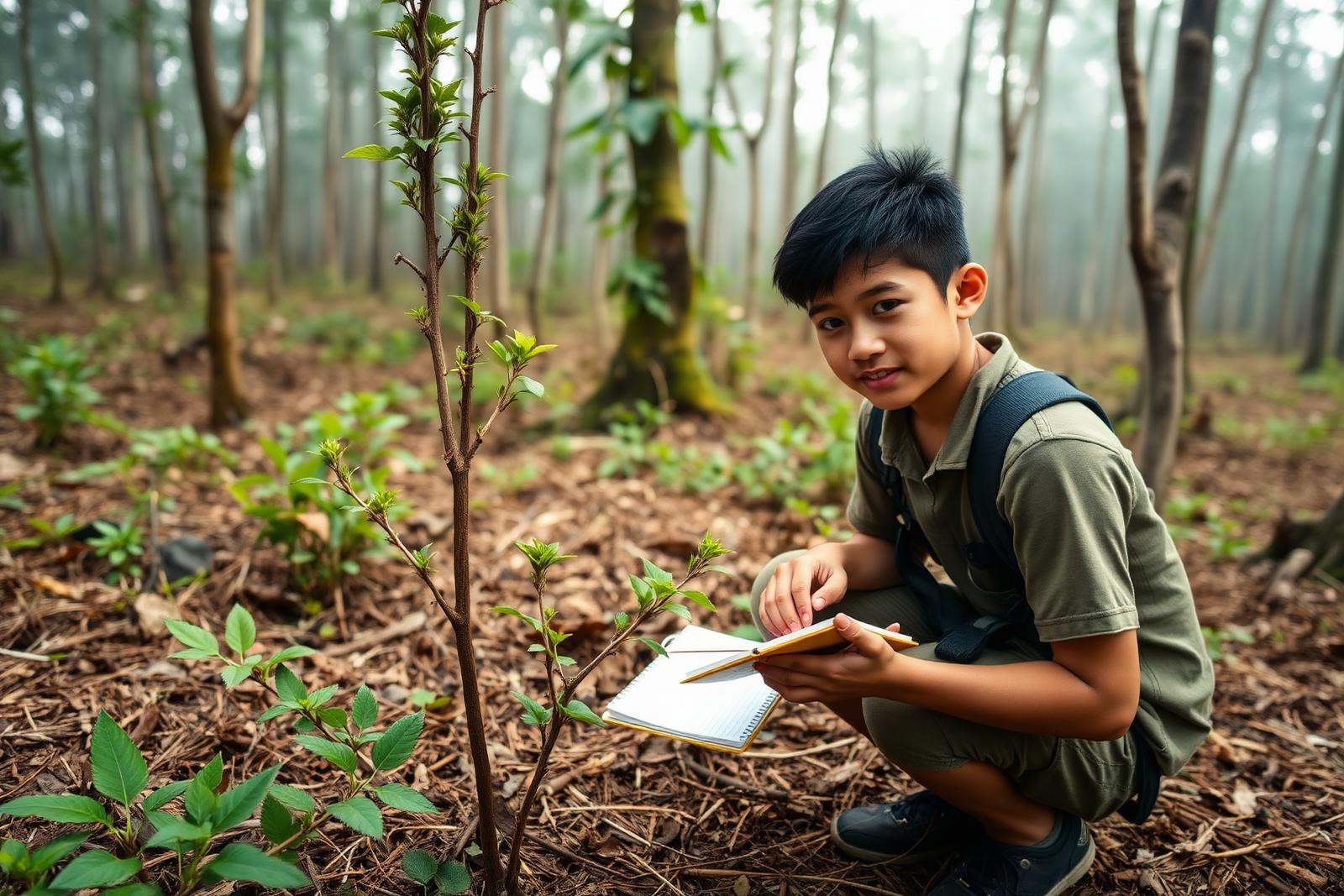
Methodology open.
Data published.
Everything we measure, document, and learn is shared. If you can't reproduce a method from our reports, that is our failure to fix.
Q4
Quarterly Restoration Report — Coastal Zone
Soil organic matter trends and species recruitment across year-2 plots.
Q3
Loja Headwaters — Catchment Mapping Methodology
Field-tested protocol for mapping cloud forest source points.
Q3
Vermillion Flycatcher Return — Riparian Zone 4
Two-year species observation study and habitat correlation.
Q2
Women Cluster Agroecology Yield — Year One
Polyculture yield, soil quality, and household impact across 6 active clusters.
Q2
Marine Debris to Biomaterial — Process Documentation
Coastal recovery to biomaterial loop with full mass balance.
Q1
Base Marítima Seca — Operational Year in Review
All field hours, restoration plots, and community engagement summarized.
Cross-institutional, by design.
No single organization can hold a hydrological corridor. We work in coordination with universities, communities, independent scientists, and regional networks.
- Universidad Nacional de Tumbes
- Loja Conservation Coalition
- Pacific Dry Forest Network
- Independent Researcher Residency
- Regional Women's Agroecology Federation
- Coastal Marine Recovery Initiative