Each group below shows up in both ledgers. Read the side that matches your lens, or read both.
Model Farmers
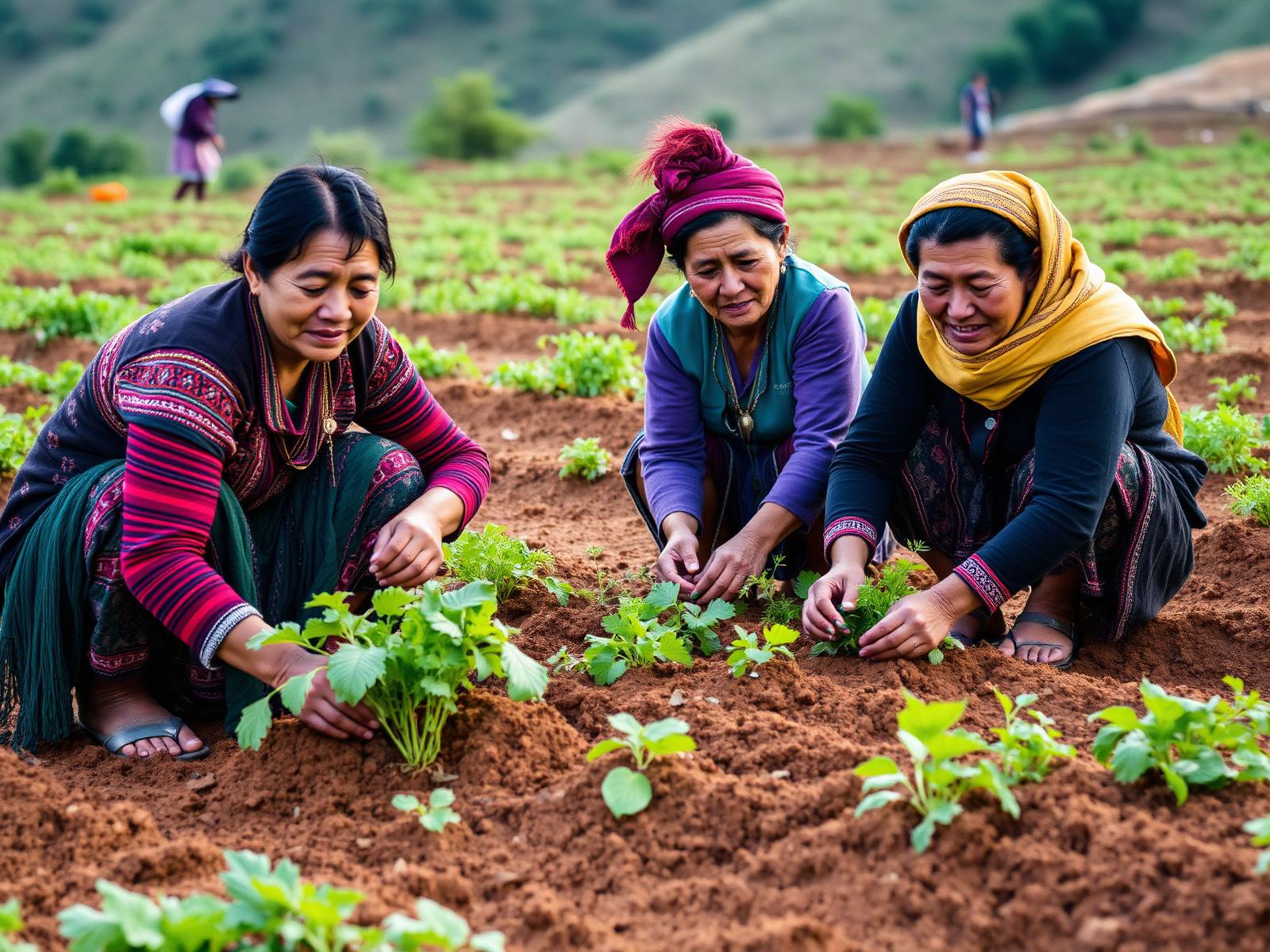
Stewards of working landLocal farmers across Tumbes and Piura already steward this land. They lead the polyculture plots, the seed banks, and the day-to-day decisions on what gets planted, where, and when.
Ecological role
Anchor species selection, soil-building rotations, and the on-the-ground decisions that determine what actually survives a dry-forest dry season.
Cultural role
Hold lineage knowledge of crop varieties, planting calendars, and field-edge habitat that no external technical assistance can replace.
Indigenous Practice
Technical baselineMilpa, polyculture, and seasonal rotation are practices refined over generations — the technical baseline of our agroecology work, not a cultural footnote to it.
Ecological role
Polyculture and milpa systems generate measurable gains in soil organic matter, pollinator presence, and water retention compared to monoculture controls.
Cultural role
Carry place-specific cosmology, ritual cycles, and inter-generational transmission protocols that frame land as relation, not resource.
Women-Led Clusters
Decision-makersWomen lead the agroecology clusters across Tumbes and Piura. They own the seed banks, the training cycles, and the decision-making about who plants what, where, and when.
Ecological role
Cluster-led seed banks preserve regional varietal diversity that would otherwise be lost to commodity-seed displacement.
Cultural role
Restore decision-making to the people who have historically held food and seed knowledge in this region — and rebuild the social fabric around it.
Youth Cohorts
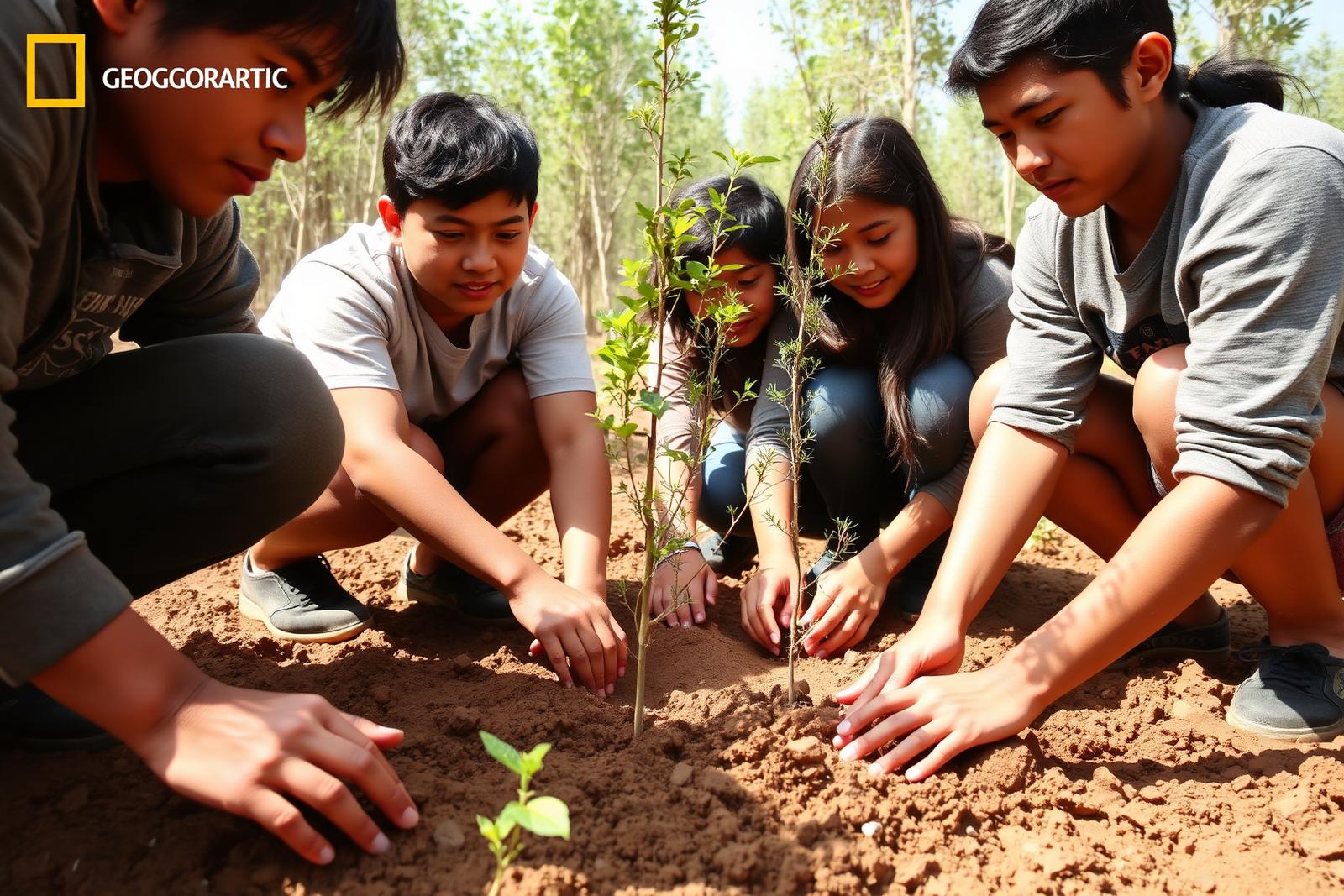
Ecological literacyMonthly field rotations at Base Marítima Seca produce a generation with hands-on fluency in soil, water, habitat, and species — not classroom abstractions.
Ecological role
Youth cohorts contribute monitoring labor: transect surveys, pollinator counts, source-point flow logs, and species observation feeds.
Cultural role
Build a local conservation workforce so the next twenty years of stewardship is held by people who grew up in these watersheds.
Cultural Rituals & Land Connection
Living archiveSeasonal ceremonies, planting cycles, and oral knowledge transmission are documented and protected as part of the ecosystem itself.
Ecological role
Ritual calendars often encode optimal planting and harvest windows tuned to local microclimate over centuries of observation.
Cultural role
Protect intangible heritage — songs, ceremonies, place-names — as the connective tissue that makes long-horizon stewardship possible.