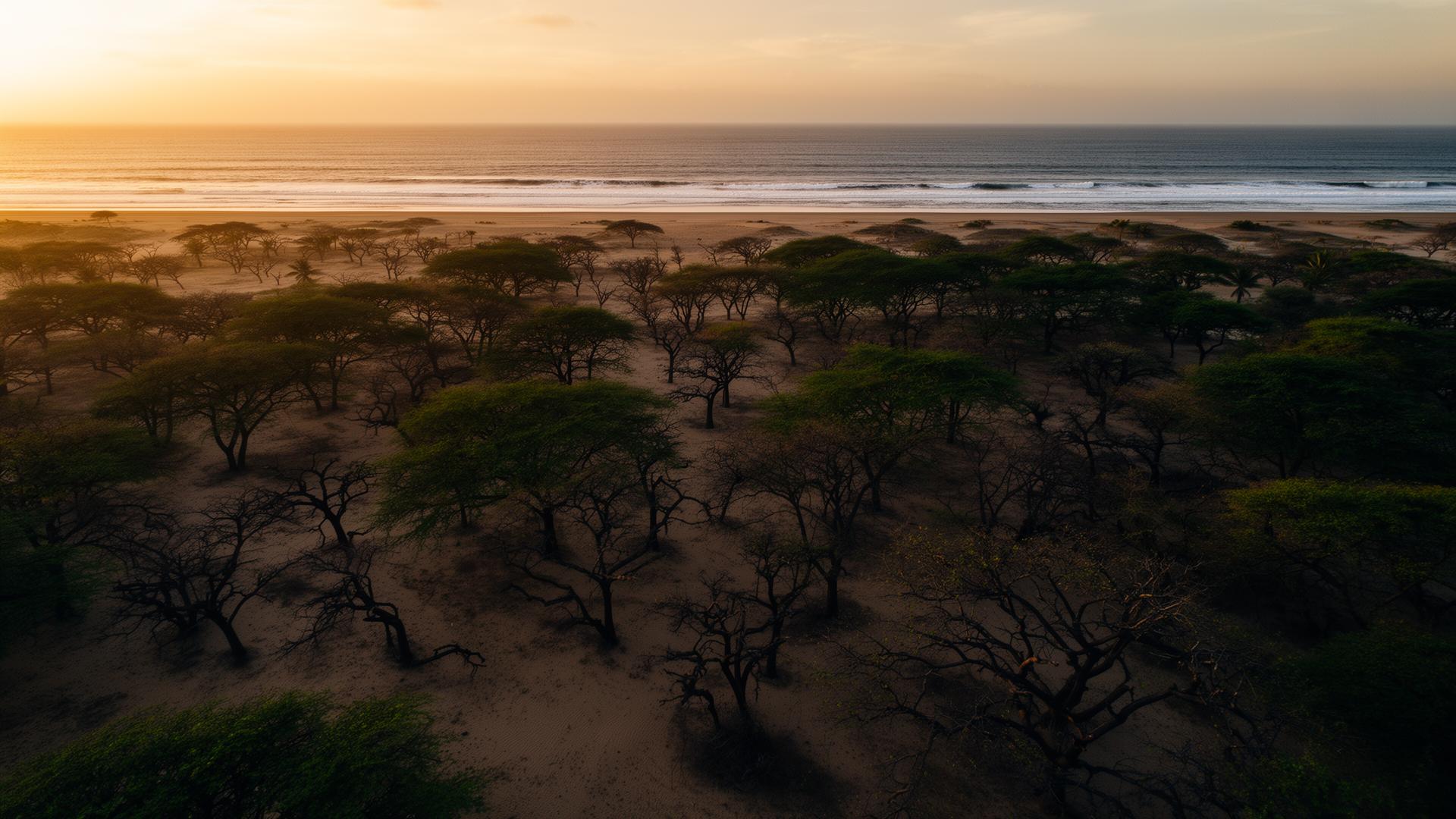
Pacific tropical dry forest meeting the coast at Zorritos, Tumbes, Perú
Zorritos, Tumbes, Perú · Live Field Base

Conserving the Fabric of Life.

Global Compass Conservation protects ecosystems and cultural knowledge as one living inheritance — from soil, water, and species to the communities who carry memory, practice, and care.

Choose your lens
Support the Field
Two Portals · One Living System

Nature and culture are not separate fields.

They are the same inheritance, seen from two angles. Choose the door that calls you — both lead to the same work.

Active Field Base

Active from Zorritos, Tumbes, Perú.

At the meeting point of Pacific coastline, tropical dry forest, seasonal water systems, and community land practices, GCCG is building a living model for regeneration from soil to sea.

247
Hectares in active restoration
89
Species documented
12
Active field zones
8,420
Field hours logged this year
12,400
Organic material reintegrated (kg)
121
Community participants
What We Conserve · Nature Lens

The ecological systems that hold the corridor.

Toggle the lens above to see the same work from the other side.

Nature

Watersheds

Headwaters, tributaries, riparian zones, hydrological cycles.

Nature

Soil

Living soil, root networks, carbon, erosion control, microbial life.

Nature

Habitat

Dry forest cover, coastal margins, restoration corridors.

Nature

Species

Birds, pollinators, reptiles, plants — indicator and keystone.

Nature

Agroecology

Polyculture, native crops, regenerative production, food forests.

Species Intelligence

A species database is not just a list. It is a map of relationships.

Open species index →
Role
Indicator value
13 matches
Field Feed · Latest

Every field note is a bridge between observation and understanding.

All field notes →
2026-04-29 · Punta Mero · Coastal Overlook

Bay-wide overview: 27 artisanal vessels working the inshore zone at first light.

Nature · OBSERVATIONCulture · Community
Why it matters

From the bluff above the bay, the inshore artisanal fleet is fully deployed by 07:30 — a working seascape, not a postcard. The same waters host blue-footed booby foraging dives and seasonal humpback transit.

Read entry →
2026-04-28 · Pier Structure · Artisanal Landing

Juvenile blue-footed booby entangled in discarded netting on pier infrastructure.

Nature · MONITORING
Why it matters

Adult booby visible on the upper roofline; a juvenile (this year's cohort, by plumage) is hung in a fragment of monofilament gillnet draped across the pier framework. Bird is alive, alert, but immobilized.

Read entry →
2026-04-27 · Dry Forest Zone 5 · Leaf-litter transect

Whiptail lizard active on restored leaf-litter floor — indicator of ground-layer recovery.

Nature · OBSERVATION
Why it matters

Adult whiptail (Ameiva sp.) recorded foraging on the leaf-litter floor of a year-2 restoration parcel. Coloration consistent with breeding-condition males: turquoise flank spotting, slate-blue throat, olive dorsum.

Read entry →
Projects

Each project holds both a nature dimension and a culture dimension.

All projects →
Support

Your support becomes visible fieldwork.

Every donation pathway maps to a tracked outcome — a tributary, a habitat, a farmer, a youth cohort. Choose what you want to grow.

Residencies & Base Access

Join the field.

The base hosts a small number of collaborators each season. Tell us how you want to participate — we'll meet you at the door that fits.

Field residentResearch collaboratorCultural documentation volunteerAgroecology apprenticeMedia / documentary collaboratorDonor / partner visit